

24 September
Search engine optimization (SEO)
Local SEO in Egypt & Saudi Arabia: 7 Strategies for 2026
- Mohamed ElSaeed
- 0 Comments
Local search has become an important acquisition channel for businesses that serve customers within a specific city, region, or service area.
When someone searches for phrases such as “WordPress developer in Cairo,” “SEO services in Riyadh,” “real estate company in Jeddah,” or “furniture moving company near me,” Google may display geographically relevant businesses across Search and Google Maps.
For companies targeting customers in Egypt or Saudi Arabia, a well-planned local SEO strategy can make it easier for potential customers to discover the business at the moment they are actively looking for a relevant service.
Google explains that local results are primarily determined by three broad factors: relevance, distance, and prominence. A complete and accurate Business Profile can help Google better understand a business and match it with appropriate local searches.
This guide explains 7 practical Local SEO strategies for businesses in Egypt and Saudi Arabia, covering Google Business Profile, local keywords, location pages, customer reviews, business information consistency, local backlinks, technical optimization, and structured data.
What Is Local SEO?
Local SEO is the process of improving a business’s visibility for searches that have a geographic or local intent.
For example:
- WordPress developer in Cairo
- Law firm in Riyadh
- SEO company in Jeddah
- Furniture moving company in Madinah
- Web design company in Egypt
- Restaurant near me
Depending on the query and location, users may see traditional organic results together with businesses displayed through Google Maps or local search features.
Local SEO differs from traditional SEO because location becomes an important part of the search context.
Google may consider where the user is searching from, the location or service area of the business, how relevant that business is to the query, and how prominent it appears online.
If you are still building the broader SEO foundation of your website, my on-page SEO guide explains how to optimize titles, content, internal links, images, page speed, and other page-level elements.
Why Local SEO Matters for Businesses in Egypt and Saudi Arabia
Many businesses in Egypt and Saudi Arabia depend heavily on customers within particular cities or regions.
Examples include:
- Real estate companies
- Clinics
- Restaurants
- Law firms
- Maintenance companies
- Furniture moving companies
- Digital agencies
- Hotels
- Local retailers
- Contractors
- Web development companies
For these businesses, ranking globally is often less valuable than becoming visible to a potential customer searching in the area the company actually serves.
Attract Customers With Local Intent
A search such as:
“air conditioning maintenance in Riyadh”
usually communicates a much more specific requirement than:
“air conditioning maintenance.”
The city gives both users and search engines more context about what the searcher needs.
That makes local keyword targeting particularly useful for service-based businesses.
Improve Visibility on Google Maps
A properly maintained Google Business Profile can make business information available across Google Search and Maps.
Customers can potentially access information such as:
- Business name
- Location
- Phone number
- Opening hours
- Reviews
- Photos
- Website
- Directions
Google recommends keeping Business Profile information complete and accurate because businesses with complete information are more likely to appear for relevant local searches.
Build Trust Before the Customer Contacts You
Potential customers often evaluate a company before calling or sending a message.
They may check:
- Reviews
- Photos
- Website quality
- Services
- Location
- Contact information
- Previous projects
Local SEO therefore works best when your Google presence and website support each other.
If a customer reaches your website from Google Maps, the website should continue building trust rather than forcing them to search elsewhere for basic information.
7 Local SEO Strategies for Businesses in Egypt and Saudi Arabia
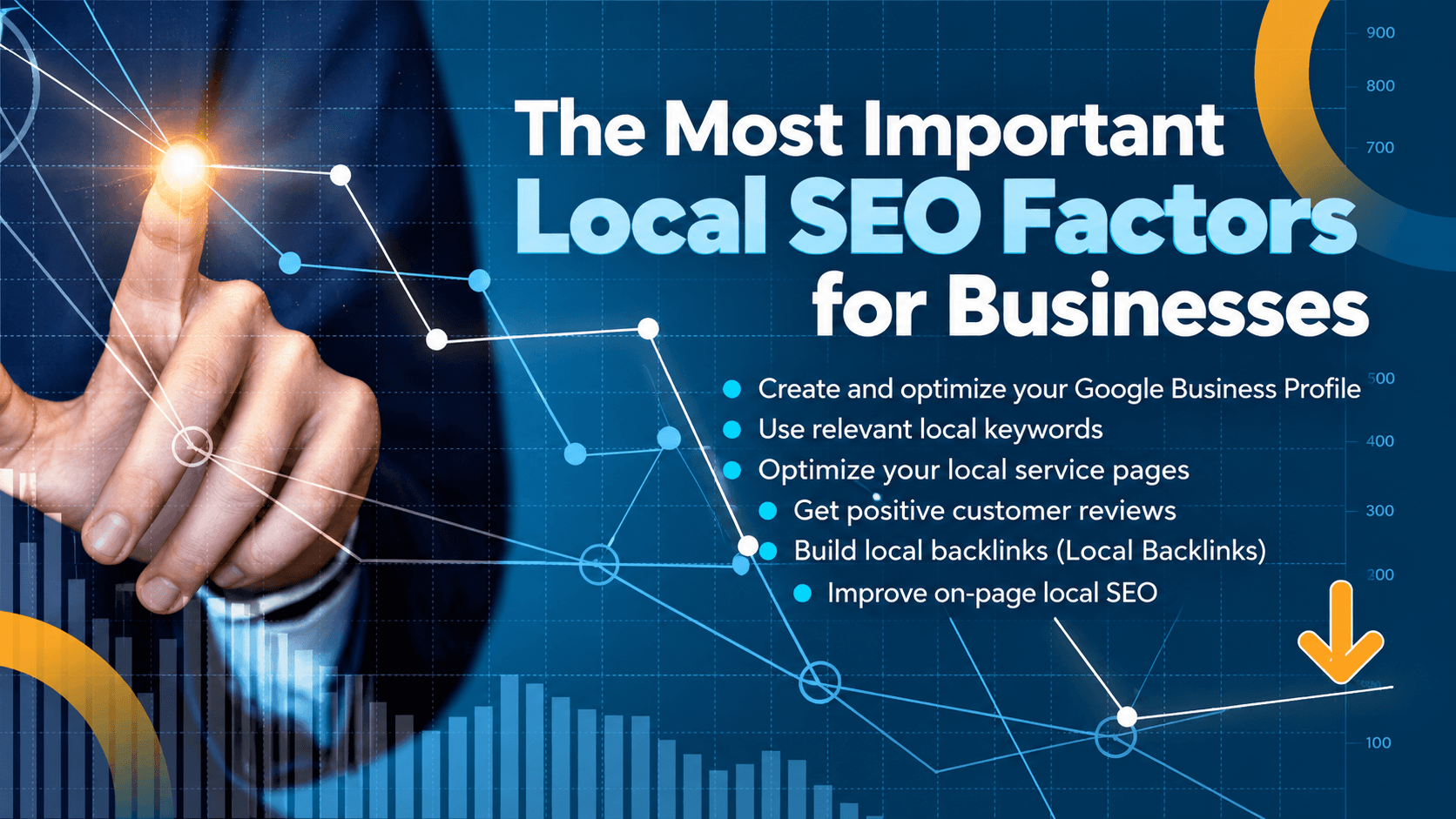
1. Create and Optimize Your Google Business Profile
A Google Business Profile is one of the most important assets for a business that qualifies for local search.
Google states that eligible businesses should either have a physical location that customers can visit or travel to customers within a service area.
You can review Google’s official Business Profile guidelines before creating or editing your listing.
Your profile should contain accurate information about:
- Business name
- Primary category
- Secondary categories where genuinely relevant
- Address or service area
- Phone number
- Business hours
- Website
- Services
- Photos
Use Your Real Business Name
Do not add cities or keywords to the Business Profile name unless they are genuinely part of the real-world business name.
For example, if a company is officially called:
Alpha Digital
do not change the profile name to:
Alpha Digital Best SEO Company Riyadh Saudi Arabia
simply to target more keywords.
Google specifically requires businesses to represent their real-world name consistently and prohibits unnecessary keyword additions.
Choose the Most Accurate Category
Your primary category should describe what the business actually is.
Google advises using the fewest categories necessary and choosing categories that specifically represent the core business rather than using categories simply as keywords.
Keep Hours and Contact Details Updated
Incorrect hours can create a poor experience, especially during:
- Ramadan
- Eid holidays
- National holidays
- Seasonal schedules
- Temporary closures
Keep your profile synchronized with the information available on your website.
2. Target Local Keywords Based on Search Intent
Local keywords usually combine:
Service + Location
For example:
WordPress Developer + Cairo
becomes:
WordPress Developer in Cairo
Or:
SEO Services + Riyadh
becomes:
SEO Services in Riyadh
Other possible patterns include:
- Web design company in Cairo
- SEO consultant in Saudi Arabia
- Moving company in Madinah
- Real estate company in Hurghada
- Air conditioning services in Dammam
- Digital marketing agency in Jeddah
However, do not insert location names into every sentence.
The objective is to demonstrate genuine geographic relevance while keeping the content natural.
Understand the Difference Between Country and City Intent
Someone searching:
“WordPress developer in Egypt”
may be evaluating developers across the country.
Someone searching:
“WordPress developer in Cairo”
has narrowed the geographic intent considerably.
Your keyword strategy should therefore reflect the areas your company genuinely serves.
The same principle applies in Saudi Arabia:
- Saudi Arabia
- Riyadh
- Jeddah
- Dammam
- Madinah
- Makkah
- Khobar
Different searches can represent different levels of location intent.
For the wider page optimization process around these keywords, see my step-by-step on-page SEO guide.
3. Build High-Quality Location and Service Pages
If your company genuinely provides services in several cities, dedicated location pages can be useful.
For example:
Web Design in Cairo
Web Design in Riyadh
Web Design in Jeddah
However, these pages should not simply be clones where only the city name changes.
A useful local landing page should include information genuinely relevant to that market.
This could include:
- The service offered in that location
- Who the service is designed for
- Local business requirements
- Relevant projects
- Service process
- Frequently asked questions
- Areas served
- Contact options
For example, a logistics company serving both Madinah and Yanbu may have legitimate differences in the service areas, routes, pricing considerations, or operating information presented on each page.
Avoid Creating Hundreds of Thin Location Pages
Do not automatically generate pages such as:
service-cairoservice-gizaservice-alexandriaservice-riyadhservice-jeddah
if the content is essentially identical.
Each location page should deserve to exist independently.
A smaller number of genuinely useful pages is preferable to hundreds of pages created only by replacing one city name with another.
If you are building these pages with WordPress, your site architecture, page templates, internal links, and performance should also be considered from the start. You can explore my WordPress development services for examples of how I approach website structure and development.
4. Build a Genuine Customer Review Strategy
Reviews provide potential customers with useful information about real experiences with a business.
They can also contribute to local visibility. Google states that review count and positive ratings can contribute to a business’s prominence in local ranking.
After completing a successful service, you can ask the customer to leave an honest review.
Google allows businesses to share a direct review link or QR code with customers.
Suitable moments include:
- After project delivery
- In a thank-you email
- At the end of a customer-support conversation
- After completing a service
- Following a successful purchase
Never Buy or Incentivize Google Reviews
Do not offer:
- Discounts
- Free products
- Gifts
- Money
in exchange for positive Google reviews.
Google explicitly prohibits incentives in exchange for customers posting, modifying, or removing reviews because those reviews must represent genuine experiences.
You can read Google’s official review best practices for the current rules.
Reply to Reviews
Respond professionally to both positive and negative feedback.
A useful reply should acknowledge what the customer actually said rather than publishing the same automated response under every review.
Google itself recommends replying to reviews because it demonstrates that customer feedback matters to the business.
5. Keep Business Information Consistent Across the Web
One of the most basic local SEO tasks is ensuring customers receive consistent information about the business wherever they find it.
This includes:
- Business name
- Address
- Phone number
- Website URL
- Working hours
- Service area
If your website says one phone number, Google Business Profile shows another, and an old directory contains an outdated address, users may not know which information to trust.
Accuracy is particularly important on the Business Profile itself. Google requires businesses to provide precise location or service-area information and accurate contact details.
For service-area businesses that visit customers rather than receive them at an office, configure the Google Business Profile according to the appropriate service-area rules rather than displaying an address that customers cannot actually visit.
6. Earn Relevant Local Links and Mentions
Backlinks remain useful signals for discovering and understanding websites, and Google explicitly states that prominence in local search is influenced in part by information such as how many websites link to a business.
However, the goal should not be to collect hundreds of low-quality directory links.
Look for relevant opportunities such as:
- Industry organizations
- Local business associations
- Suppliers
- Business partners
- Local publications
- Relevant specialist websites
- Events or sponsorships
- Genuine collaborations
For example, if a Saudi real estate company sponsors a local business event and receives a legitimate mention from the event’s website, that is far more meaningful than generating dozens of unrelated directory profiles.
Likewise, an Egyptian company featured in a relevant industry publication can receive both visibility and a useful contextual backlink.
Focus on relevance and legitimacy, not quantity alone.
7. Optimize Your Website for Local Search
Your Google Business Profile cannot compensate for a poor website.
The website should clearly communicate:
- What you offer
- Where you operate
- Who you serve
- How customers can contact you
- Why they should trust the business
Several technical and on-page elements deserve attention.
Create Clear Local Titles and Content
For a location-specific page, a useful title might be:
WordPress Development Services in Cairo | Brand Name
rather than:
Best Cheap No.1 WordPress Website Developer SEO Cairo Egypt
The first communicates the topic and location naturally. The second looks forced and is unlikely to create a professional impression.
Optimize Website Performance
A local visitor on a mobile connection still expects the website to load efficiently.
Performance optimization can involve:
- Caching
- Image compression
- WebP or AVIF
- CSS optimization
- JavaScript optimization
- CDN configuration
- Reliable hosting
If performance is an issue, my WordPress speed optimization guide covers caching, images, Cloudflare, WP Rocket, LiteSpeed Cache, and other optimization tools.
Hosting also affects the technical foundation. My WordPress hosting guide for Egypt and Saudi Arabia explains server locations, hosting types, security, performance, and scalability.
Make the Website Mobile Friendly
Many local searches happen when users are trying to contact a company, find directions, compare businesses, or solve an immediate problem.
Important mobile actions should therefore be easy to reach:
- Call
- Directions
- Contact form
- Request a quote
Add LocalBusiness Structured Data Where Appropriate
Google supports LocalBusiness structured data, which can communicate information about a local business such as its name, address, opening hours, telephone number, and other relevant details.
You can review Google’s LocalBusiness structured data documentation for the supported properties and implementation requirements.
Schema should describe information that genuinely exists on the page. It should not be treated as a way to fabricate locations or reviews.
A Practical Local SEO Strategy for Egypt and Saudi Arabia
Local SEO should be approached as an ongoing system rather than a one-time configuration.
Phase 1: Build the Foundation
Start with:
- Accurate Google Business Profile
- Correct business category
- Correct location or service area
- Website connection
- Consistent contact information
Phase 2: Optimize the Website
Review:
- Service pages
- Location pages
- Page titles
- Content
- Internal links
- Mobile design
- Performance
- Contact information
- Structured data
Your on-page SEO strategy should support the same locations and services your Business Profile communicates.
Phase 3: Develop Customer Reviews
Create a repeatable process for requesting genuine reviews after successful customer interactions.
Avoid purchasing reviews or rewarding customers for positive ratings.
Phase 4: Build Local Authority
Develop legitimate relationships and mentions through:
- Partnerships
- Industry websites
- Local organizations
- Publications
- Business relationships
Phase 5: Measure and Improve
Monitor:
- Local organic traffic
- Important landing pages
- Search queries
- Calls and enquiries
- Google Business Profile interactions
- Leads
- Conversion rates
The goal is not simply to increase rankings.
The objective is to generate relevant visibility that leads to real business enquiries.
Google does not provide a method to request or pay for a higher local ranking; local visibility is determined algorithmically using factors such as relevance, distance, and prominence.
Common Local SEO Mistakes
Adding Keywords to the Google Business Name
Do not add locations and services to the Business Profile name unless they are genuinely part of the real business name.
This can violate Google’s Business Profile guidelines.
Using an Incorrect Address
Do not use:
- Fake offices
- Virtual addresses that do not meet Google’s requirements
- Locations where the business does not operate
Google requires a Business Profile to represent a real eligible business location or service-area operation.
Leaving Business Information Outdated
Update your:
- Hours
- Phone
- Website
- Address
- Service areas
when business information changes.
Creating Duplicate City Pages
A page for Cairo and another for Riyadh should not be identical except for replacing the city name.
Give every local page a genuine purpose.
Ignoring Reviews
A profile with outdated information and unanswered customer feedback can create a weaker impression than an actively maintained profile.
Buying Backlinks From Irrelevant Websites
Hundreds of unrelated links do not automatically create a strong local presence.
Prioritize relevant relationships, useful mentions, and trustworthy websites.
Focusing on Google Maps While Ignoring Your Website
Google Business Profile and the website should work together.
A good profile that leads to a slow, unclear, or outdated website can still lose the potential customer.
Frequently Asked Questions About Local SEO
How Long Does Local SEO Take?
There is no universal 3- or 6-month guarantee.
The timeline varies according to factors such as:
- Competition
- Business location
- Existing website authority
- Google Business Profile history
- Website quality
- Reviews
- Local competition
- Content
- Backlinks
Some improvements can be reflected relatively quickly, while competitive local markets may require sustained work.
Avoid any provider guaranteeing a specific Google Maps position within a fixed number of days.
Is Local SEO Suitable for Every Business?
Local SEO is especially useful when customers search based on location or when a company serves a defined geographic market.
Examples include:
- Restaurants
- Clinics
- Lawyers
- Real estate companies
- Maintenance companies
- Local service providers
- Hotels
- Retail stores
A completely online business with no meaningful geographic customer relationship may require a different SEO strategy.
What Is the Difference Between SEO and Local SEO?
Traditional SEO focuses broadly on increasing organic search visibility.
Local SEO places additional emphasis on geographic relevance, including:
- Business location
- Service areas
- Google Business Profile
- Local search queries
- Reviews
- Location pages
- Local business information
The two are not separate systems.
Local SEO still depends heavily on strong traditional SEO foundations.
Do Google Reviews Help Local SEO?
Google states that review quantity and positive ratings can contribute to the prominence component of local ranking.
Reviews should always reflect genuine customer experiences, and businesses should never offer incentives in exchange for positive ratings.
Do I Need a Website if I Already Have a Google Business Profile?
For many professional businesses, having both is preferable.
A Business Profile provides quick local information, while a website gives you more space to present:
- Services
- Case studies
- Pricing or packages where appropriate
- Detailed content
- FAQs
- Portfolio
- Contact methods
- Brand information
A website also allows you to build organic visibility for a much broader range of relevant searches.
Conclusion
Local SEO can be a valuable growth channel for companies targeting customers in Egypt, Saudi Arabia, or specific cities within those markets.
A strong strategy combines:
Google Business Profile + Local Keywords + Location Pages + Reviews + Accurate Business Information + Relevant Links + Website Optimization
But Local SEO should not be approached as a collection of tricks designed to manipulate Google Maps.
Google’s own documentation makes the underlying model clear: local results are mainly influenced by relevance, distance, and prominence.
Your job is therefore to make the business easy for both customers and search engines to understand.
That means accurate information, genuinely useful local content, real customer reviews, a professional website, consistent contact information, and a strong reputation over time.
If you want to improve the website itself before building a wider SEO strategy, read my complete on-page SEO guide or explore my WordPress development services.
You can also browse my WordPress projects and case studies to see websites developed for businesses across different industries.
If you already have a company website and want to discuss its structure, performance, or local search foundation, you can contact me through my website or discuss your project directly with me on WhatsApp.




Leave A Comment